
Lakeland’s Tankless Water Heaters
Tankless Water Heaters with Trutankless®
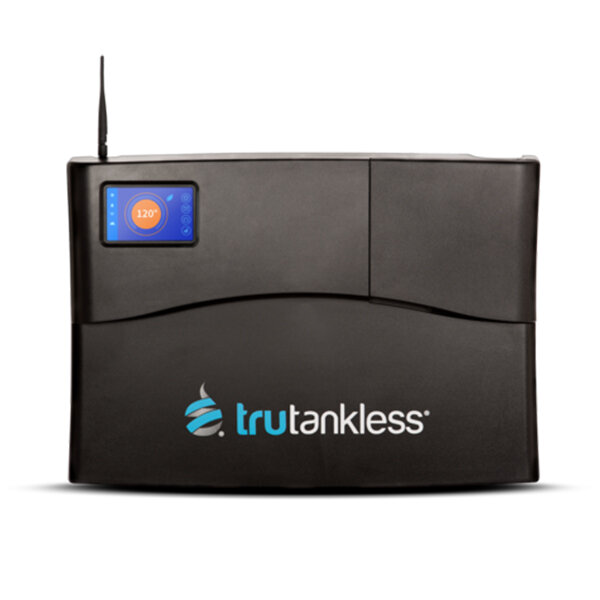
Live your life with endless hot water by going tankless. Stuart’s Plumbing provides the most updated hot water heater technology in the form of tankless water heaters with Trutankless®.
The benefits of a tankless heater are vast; from space-saving to money-saving, going tankless will provide your home with continuous hot water without the fear of tank failure or health hazards.
- 99% Efficiency
- Self-flushing design eliminates most maintenance requirements
- Offers comfort and economy modes
- Threaded elements for ease of service
and replacement - Temperature and pressure monitoring
and relief - Automated customer service call notifications
- Remote diagnostics
- Live support with Trutankless® professionals
- Lifetime Limited Warranty on heat exchanger
- 2-Years Labor, 5-Year Parts Warranty
- Extended Manufactures Warranties Available
Tankless heaters are smart. Control your heater from your phone or device by connecting it to your smart home. This not only maximizes your potential to save money but provides customizable features that best fit your lifestyle.
New Hybrid
Hybrid Water Heater
Since hot water usage accounts for 25% of residential energy costs, Trutankless® predicts Americans would save $8.1 billion annually if families switched to tankless heaters. Allow Stuart’s Plumbing, a Preferred Partner with Trutankless®, to walk you through the process of selecting the best tankless option for your home.

Ready for a Home That Feels Worry-Free Again?
Plumbing problems don’t have to disrupt your family’s routine. Stuart’s Plumbing is the trusted choice for homeowners across Lakeland and Polk County. Let us restore the comfort and safety your home deserves.
Trusted Quality for Over 30 Years
How Does it Work?
A hybrid water heater depends on the surrounding ambient air to heat water. Instead of creating heat through the use of heating elements, the system uses existing heat from the air surrounding it. A hybrid water heater draws heat from the air into the evaporator coil. The refrigerant in the coil absorbs the heat and the heat exchanger in the tank transfers this heat to the water. Because this technology uses the heat from the outside air, hybrid heaters are not ideal for cold climates. So, if you are thinking of installing a heat pump water heater, your basement won’t do.
What We Love
Since hybrid water heaters do not solely depend on a manufactured heat source, they are energy efficient. Heat pumps use 60% less energy to heat water than conventional water heaters.
Our Ultimate Hybrid Water Heaters
If you’re considering buying this water heater, we have one recommendation: Voltex Hybrid Electric Heat Pump 66-Gallon water heater. The Voltex hybrid heater is one of the most innovative hybrid water heater technologies to draw heat. The pump does not only heat water but can dehumidify and cool air at the same time. This electric heat pump will also help you reduce your heating costs by up to 73% and Voltex prioritizes homeowners’ experience with an exceptional user-friendly display.
Also, while you’re away, you can leave the heater in vacation mode. This way, you will not have to worry about the heater working while you relax on one of our local beaches. Purchase a hybrid water heater from Stuart’s Plumbing and get select models with a 10-year warranty.
Tank Water Heater
Tank water heaters, or traditional storage tank heaters, are a type of conventional water heater that relies on a conventional heating system for your hot water needs and have been around for over 100 years. Remember the Norwegian immigrant inventor Edwin Ruud? Conventional water heaters still follow the design he patented back in 1897.
How Does It Work?
Traditional storage tank water heaters have two main components: the storage tank and the element. An electric heater has two elements, while gas heater uses a single burner plate method. Tank heaters also have a thermostat you can use to set or adjust water temperature heat levels. When your water goes into the tank, heating begins at your preset temperature. Then, when all the water has been heated, the heater shut off. If the hot water runs out or cools, the heater will automatically resume its duties.
What We Love
Since these kinds of heaters have been around for so long, they are more affordable. This means if you are looking to install conventional heaters you will not have to worry about a hefty upfront investment.
Our Ultimate Tank Heaters
We have listed our favorite of the two types of conventional heaters below. Though both are exceptional, we would recommend the electric heater over the gas for the sake of the environment.
Proline Master 50-Gallon Electric Water Heater
The Proline Master celebrates the environment with its premium insulation that reduces standby heat loss. The heater comes with a first-hour rating of 62 gallons, perfect to serve homes with high hot water demand. Empowered by the Core Gard sacrificial anode, the tank is also corrosion protected. The manufacture will back your Proline purchase with an 8-year warranty.
Cyclone Mxi Gas Tank Water Heater
The Cyclone Mxi with iCOMM Remote Monitoring is one of the finest gas tanks on the market. Its modulating models allow you to adjust the firing rate so you can control energy consumption levels.
Tankless Water Heater
An art in efficiency is what we call tankless water heaters. Imagine the humble concept of a traditional water heater, powered by innovation and transformed through modern technology.
Tankless water heaters still feed off the concept of conventional heating, which means they depend on either gas or electricity to operate. But as the name suggests, tankless water heaters do not have a storage tank and, instead, heat water on demand. Tankless water heaters have two primary designs: the whole-house design and the point-of-use design.
How Does It Work?
When you open the hot water tap, cold water flows through the water heating unit. Once in, the flow sensor will signal the control panel to begin the heating process. In a gas or propane-powered heater, the control panel will ignite the burner. The heat from the burner is then captured by the heat exchanger and transferred to the water. In an electric heater, the heating process is the same; the only exception is that instead of a burner you have an electric element.
What We Love
Because of their design, tankless water heaters are among the most energy-efficient heaters on the market. Homeowners don’t need to worry about running the bill when they are not using hot water.
Condensing Water Heater
For homes powered by natural gas, condensing water heaters are the ideal heaters. Condensing water heaters use waste fumes, or what we call exhaust gas, to facilitate the heating of water. There are two types of condensing boilers: boilers that have a standard storage tank and tankless boilers. Centered around efficiency, these water heaters are the golden boys of reducing utility costs.
How Does It Work?
When it comes down to the science, condensing water heaters take a new approach to heating water. By using the excess heat that passes through the heat exchanger. It recycles it back through, capturing as much of the heat as possible before exhausting it out in the air.
In a standard boiler:
The fuel is ignited at the burner which heats the air within the combustion chamber, then the heat exchanger captures the heat created and transfers it to the cold water coming into the heater. As a byproduct, exhaust gas is produced. A fan then pushes the exhaust gas back through the heater to use it a second time getting the most use out of the heat created. The byproduct of this is condensation. This method allows the heater to use as much as 94 percent of the heat created by the burner to heat water, making it one of the most efficient tankless models on the market.
In a condensing boiler:
A condensing boiler has a second exchanger, which is the key element of this design. The condensing boiler captures this exhaust gas before leaving the unit. The fan drags, then redirects it to the secondary heat exchanger. In the same way that the primary exchanger draws heat out of the air, the secondary exchanger draws heat out of the exhaust air. It then uses this heat to pre heat the cold water entering the system before it is channeled to the primary exchanger. There, it is heated to your preset temperature. By making use of this exhaust air heat, a condensing heater ensures that the boiler does not require a lot of wasted energy to heat water.
What We Love
Its overall design. A condensing heater repurposes exhaust gas, which would otherwise be wasted, and to preheat water before it enters the first heat exchanger, thereby lowering the energy required.
Our Ultimate Condensing Heater
Below we have listed our favorite condensing water heaters, the standard with a tank and the tankless solution:
ProLine XE Polaris Direct Vent Gas Heater
Backed by a 34-gallon tank, ProLine XE Polaris goes beyond the standard tank boiler. The heater is powered by a 100,000 BTU gas burner which enables it to meet the water demands of any household. This high-efficiency heater has a 96% thermal efficiency but that is not why we hail it as high performance. It pushes the envelope, carrying a recovery rate of 129 gallons per hour. XE Polaris also meets the ultra-low NOx emission requirements.
Rinnai RUR199
The Rinnai RUR199 comes in two distinct models. First, we have the RUR199i model, which is for indoor installation. The second model is the RUR199e which you will mount outside your home. Rinnai RUR199 models are decked with the Sensei series. This tech helps make Rinnai heaters Energy Star compliant. Sensei is Rinnai’s superpower, enabling it to be energy efficient while also providing ultra-low NOx emissions. When paired with the mobile app, you can enjoy remote monitoring such as scheduling your activation and deactivation times.
Solar Water Heater
Solar water heater owners have the sun to thank for lower utility bills and hot showers. Solar heaters are among the greenest ways to heat water within your home. Therefore, through incentives, the government continues to reward people who adopt this heating method.
Some people argue that the downside to solar water heaters is their heat source. Though the sun is not going anywhere, their dependence on sunlight means they may not function well in some areas and during certain weather conditions. This warrants homeowners to have a secondary heat source for those snowy and rainy days but, even with this possible hiccup, solar heaters still stand as the best way to heat water while caring for your pocket and the environment.
How Does It Work?
Let’s get down to the internal mechanics. Located in the panels are collectors which are responsible for absorbing the radiation from the sun. The heat exchanger then transfers the collected heat to the cold water entering your water tank. For homes located in cooler climates, solar heaters depend on non-freezing liquid. This liquid absorbs the heat from the sun. The fluid then travels to the heat exchanger which transfers the collected heat to the water within the system. The fluid then circles back to the collectors to restart this process.
The most common type of solar water heaters are tank heaters, but some industry geniuses have worked to produce a tankless solar water heater. The way tankless solar heaters operate is still the same as the standard solar heater.
What We Love
There is very little to not love in a solar-powered water heater. It is not only about saving money. Solar water heaters are eco-friendly, helping homeowners reduce their carbon footprint all while saving a ton on utility bills.
Our Ultimate Solar Water Heater
For our solar pick, we have listed two sun-powered water heaters. If you think eco is the way, try one of these:
Sunbank 40-Gallon Solar Water Heater
The Sunbank 40-gallon solar water heater is a passive heater. This means it doesn’t require a pump to operate. Another distinguishing feature of the Sunbank is its 316L stainless steel tank. This puts longevity at the heart of its design. The heater also stands as the first of its kind to be SCR certified. And with 40 gallons of hot water, what can’t you do?
Solcrafte Tankless Water Heater
Solcrafte is pure-breed innovation. This water heater pushes the boundaries in water heater technology to produce a state-of-the-art efficient heater. The Solcrafte water heater does not carry an external water tank. Instead, embedded within the collector is where you will find the tank.
This water heater has four layers. The first level is the tempered safety glass that sits at the top of the heater. If you venture beyond the glass, you will find 99% clear heat insulation. The third level shows mastery of innovation. This is where you find the collectors, patented pipes, and storage tank, all in one layer. The tank has a carrying capacity of 100 liters to 200 liters. On the last layer, you have the aluminum frame with polyethylene insulation. What we celebrate the most about this heater is its simplicity. Due to the location of the storage tank, the water heating process begins once sunlight hits the unit.
Combination Water Boiler
A combination water boiler, or a combi as the English call it, is a two-dimensional boiler. It doesn’t only heat water, but further heats your home. It is the perfect synonym for efficient energy usage. We mean it boosts an incredible 95% annual fuel utilization efficiency. The combination heating boiler conserves excess heat instead of expelling it. It achieves this through the condensing process, and heats water the moment the hot water tap is opened. This stamps out the need for a storage tank.
How Does It Work?
A combi is a two-component unit. It feeds heat to the central heating system and the water heater. This design mandates that the system have two heat exchangers within the compact box. When the room temperature plummets, the thermostat induces the boiler. Water goes into the first, or primary, heat exchanger where it is heated. This water then travels into the central heating pipes to heat the radiators.
Once the room temperature reaches the desired level, the thermostat will signal to the radiators to turn off. This water is not discarded; instead, it is recycled and kept warm. This is one of the ways the combi saves energy. Like the condensing heater, it ensures that the heating process will not start from scratch with cold water but rather the preserved warm water.
For heating water, the process is slightly different. The moment the hot water tap is opened, cold water is drawn into the system. It then passes through the second heat exchanger, which transfers into it the heat drawn from the burner. This makes hot water available as it is needed. Homeowners can also employ the thermostat to set the water heat level to a desired temperature.
What We Love
Our favorite thing about the combi boiler is its overall design. We appreciate the genius of using the same unit to heat water and your home space.
Our Ultimate Combination Water Heater
Another award-winning heater has made our list, and this time it hails from the United Kingdom. A two-time Good Housekeeping Award winner, Ideal Logic is a model within Ideal’s range of Combi heaters. This gas-fueled heater is Quiet Mark certified which means you won’t hear it work. Ideal has a projected hot water output of 12.4 liters per minute, which makes it ideal for homes with moderate demand for hot water.
Point-of-Use Water Heater
At last, we come to the point-of-use water heater. Point-of-use water heaters are a type of tankless water heater. These heaters focus on one plumbing fixture instead of the whole house.
Point-of-use water heaters are associated with single plumbing fixtures. This allows hot water production to be concentrated on a single output point. They also allow you to control the water temperature at that singular point, be it a shower, tub, or sink. Thanks to this makeup, point-of-use is among the most affordable heaters you can find out there.
How Does It Work?
The beauty of point-of-use water heaters is their ability to produce warm water where and when it is needed. When water enters the system, the control panel will ignite the heating source. This heat will then be transferred to the water by the heat exchanger, resulting in your warm shower.
What We Love
Point-of-use heaters only give you hot water where and when you need it. This can help homeowners save time and money as heating focuses on only one output area instead of the whole house. Our ultimate point-of-use water heater armed with hydraulic controls, Stiebel Elton DHC point-of-use tankless water heater takes the spot for our favorite POU water heater. This compact water heater was created with your sink in mind. The Stiebel POU comes with an all-copper element and a safety high-limit switch that reduces the heater’s chances of dryfiring or failure.
Pros and Cons of Different Water Heaters
No water heater is perfect. But they all can do a decent job at heating your water. Below we have explored the different benefits and slight disadvantages of each water heater.
Hybrid Water Heaters
A combination of a heat pump and a standard water heater adds innovation to your water heating process. But whether that is enough for your home will depend on the pros and cons below:
Pros
- Last longer than traditional water heaters
- Use up to 60% less energy than conventional water heaters
- Environmentally friendly
Cons
- Because of the pump, they require a lot of space
- Hefty upfront cost
Tank Water Heaters
A lot of innovation has come to the realm of heaters, but many think these heaters are outdated. As to whether this is the case, only you can decide.
Pros:
- They are affordable
- Have a large water capacity
Cons
- Waste energy as they lose standby heat
- They require large spaces
- Run out of hot water after extended usage periods
Tankless Water Heaters
Should you go tankless? This list of pros and cons will help you decide.
Pros
- They are more energy efficient than standard tank heaters
- Consume minimal space as they have no tank
- Don’t waste energy through standby heat loss
- Provide on-demand hot water supply
Cons
- Expensive initial investment
- Have a hot water lag time
- When there is a high-water demand, tankless water heaters may struggle to keep up
Condensing Water Heaters
What are the advantages and disadvantages of condensing water heaters? They are below:
Pros
- More energy efficient
- Safe for the environment as they lower carbon footprint
- Condensing boilers don’t require a lot of space
- Help lower utility bills
- They are simple to install
Cons
- They are expensive to maintain
- They are expensive to install
Solar Water Heaters
Where the sun is involved, there will certainly be energy saved. But there are other advantages to installing solar water heaters:
Pros
- Safe for the environment
- They are backed by government incentives
- They are among the most energy-efficient heaters
- Take advantage of clean energy
- They have low maintenance costs
Cons
- Solar heaters have high installation costs
- Some solar water heater models are weather dependent
- They will require a large roof space
Combination Water Heater
A combination of a water heater and a central heating system makes the perfect pair. But what should you know about its disadvantages before committing?
Pros
- More energy efficient than conventional boilers
- They provide hot water on demand
- Help you save money on energy bills
- They don’t require a lot of space
- They have a dual operation, heating water, and central heating system
Cons
- Combis may fail to meet high water demands
- When they break, you will be left without hot water and heating
Point-of-Use Water Heater
They are small, compact, and inexpensive. Let’s explore the advantages and disadvantages of this compact water heater.
Pros
- They don’t require a lot of space
- They are energy efficient as they provide water where it’s needed
- Easy to install
- Provide on-demand hot water
Cons
- Can only serve one plumbing fixture
- They have a hot water lag time
How Do I Determine Which Heater Is Right for Me?
Picking the right water heater can be the difference between a hot shower and an ice bath.
Determining which water heater to pick for your home depends on a couple of factors.
If you are unsure which water heater is best for you, Stuart’s Plumbing can help. With our years of experience, we can help you pick the perfect heater for your home.
Energy Source
The type of water heater you choose for your home depends on the energy source you use. If your home’s primary heating is gas, then you may want to consider a condensing water heater or a tankless. But if you rely on electricity, then we would advise one of the tank solutions. And if you are exploring clean energy, then a solar water heater is the answer.
Budget
Another factor that goes into water heater installation is budget. If you cannot afford to lavish on a heater, then the standard tank heater or point-of-use would be the right pick. But if you have saved a couple of dollars up some money, then you can journey into solar, tankless or even condensing.
Home Capacity
What size heater can your home accommodate? The capacity of your home is another factor that will determine the type of water heater you settle for. For example, if you reside in a small apartment, then we would advise you to pick an electric tankless water heater. But if you have space to spare you could explore the hybrid water heater.
What Is the Installation Process of Water Heaters
Two things go into installing water heaters: expertise and equipment. If you are a DIYer who possesses both, then taking on an installation project will save you money. But if you do not have these in your arsenal, then partner with a certified plumber like us! However, if you are working with gas lines, the law demands that you call on a licensed plumber, again- like us!
Step 1: Turn the Water and Energy Off
To start your installation process, turn your water and energy source off. If you use electricity, you will need to switch off the heater’s circuit breaker. But if your house depends on gas, switch off the gas valve on the supply.
Step 2: Empty the Heater
Once the power is turned off, empty the heater. You can attach a water hose to the drainage valve and let it drain the heater. You may want to attach the hose to a bucket or sink.
Step 3: Disconnect the Water Lines
Now it is time to lose the heater. Disconnect the water lines attached to the heater. Before handling this task, ensure that you have the appropriate tools.
Step 4: Disconnect the Power Lines
For this, you may need to call on a professional as you will be working with power lines. You will need different approaches depending on your energy source. And if you have a gas heater, you will also need to disconnect the vent.
Step 5: Swap the Heaters
When everything is disconnected, it is time for the great swap. Remove the old heater and place in the new.
Step 6: Install the Fittings
You will need to install the fittings connected to your heater. This will include temperature and pressure relief valves.
Step 7: Reconnect the Water and Power Lines
The heater is mounted, and the fittings are in; what comes next are the power lines and water lines. There is a lot of science that goes into reconnecting the lines, which is why we would still recommend seeking assistance from one of our qualified professionals.
Step 8: Test Drive
When all the work is done, it’s time to take your new heater for a test drive. Run yourself a bath and relish in the workmanship.
Water Heater FAQs
It only makes sense to have a few questions regarding water heaters. And it is only fair that we have answers.
Does My Heater Need Replacing or Repairing?
When you are struggling to get hot water, it can be difficult to know if what you need are repairs or to replace your heater. If you are not having major issues with your heater, all you may need are repairs. But if you find yourself having to complete several repairs, seeing rust-colored water, or having leaks, then it is time to replace that heater.
Why Are Tankless Water Heaters so Popular and Do I Need One?
We at Stuart’s Plumbing would advise anyone to go tankless. Tankless water heaters will give you hot water on demand. This erases the need for a tank while still meeting household water needs. These types of water heaters are also energy efficient.
My Heater Isn’t Producing Hot Water. What Could Be the Problem?
There could be several reasons for this. Some possibilities include the absence of power, a leaking heater, or a broken thermostat.
Ways to Prolong the Life of Your Heater
Every homeowner wants to find ways to prolong their water heater life. That is because nothing beats a hot bath after a long day. Some of the ways you can achieve this are by flushing your heater at least once a year and inspecting your pressure valve.
At Stuart’s Plumbing, we pride ourselves in our craftsmanship. Located in Lakeland Florida, we have been serving clients for over 30 years. Contact us to hear how we can help.